Administrative calls
Provide extensions, transfers, permissions, and external calls for office teams.
Products
Every OpenVox product line, from PBX systems to gateways and accessories.
View all 184 productsIPPBX and phones
Cards and accessories
Connect my sites
Modernize what I have
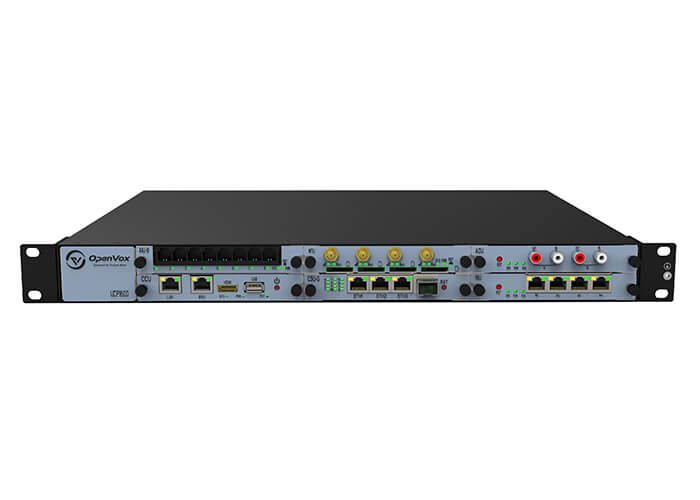
Coordinate office calls, production voice, emergency phones, and zone paging across workshops, warehouses, loading areas, and security points from a managed communications core.
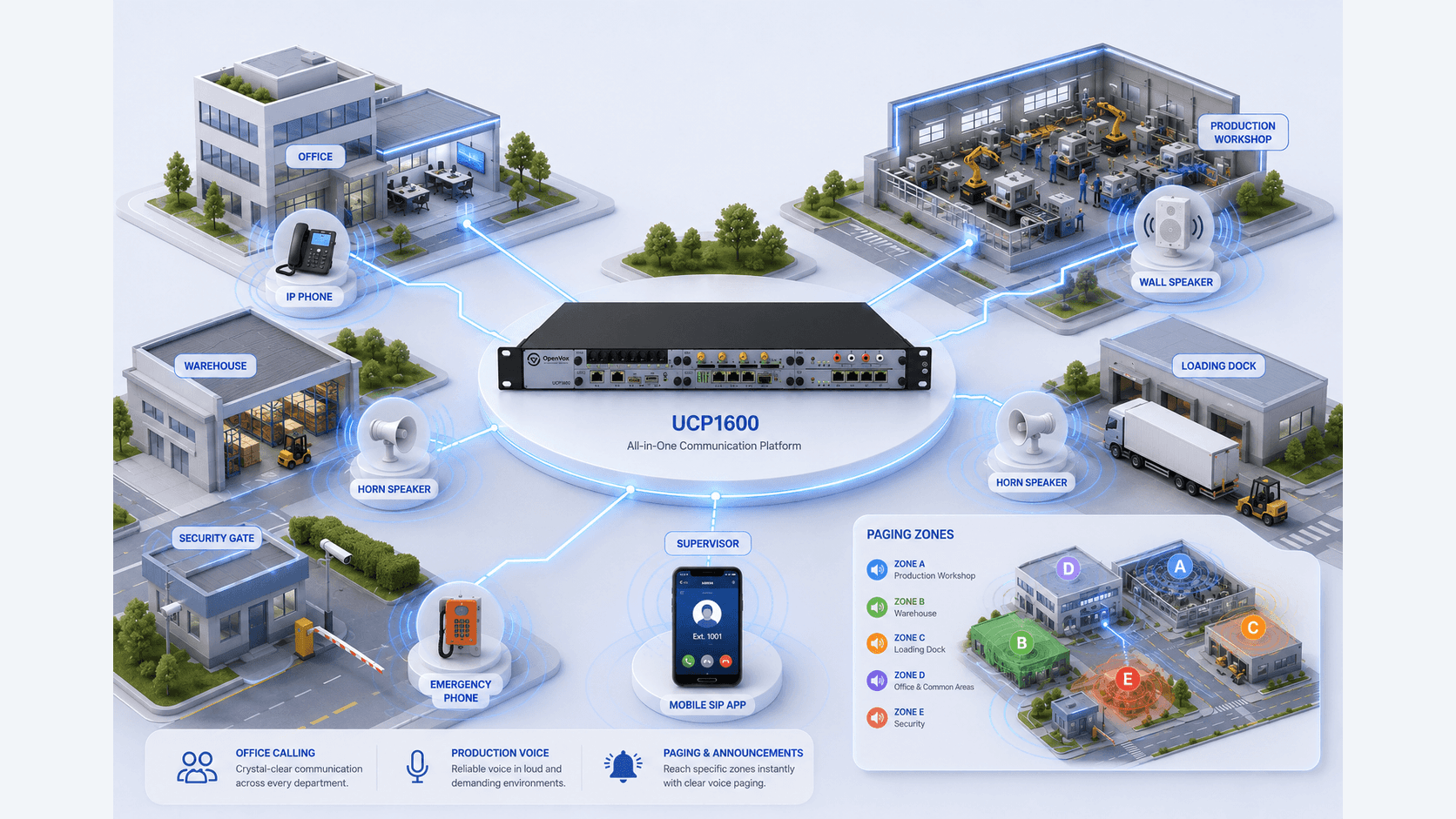
Office teams, production areas, and local service points may depend on separate phones, trunks, and paging paths.
A practical design maps each area and communication task before assigning UCP, SIP paging, analog access, digital trunks, or cellular backup to the site.
Provide extensions, transfers, permissions, and external calls for office teams.
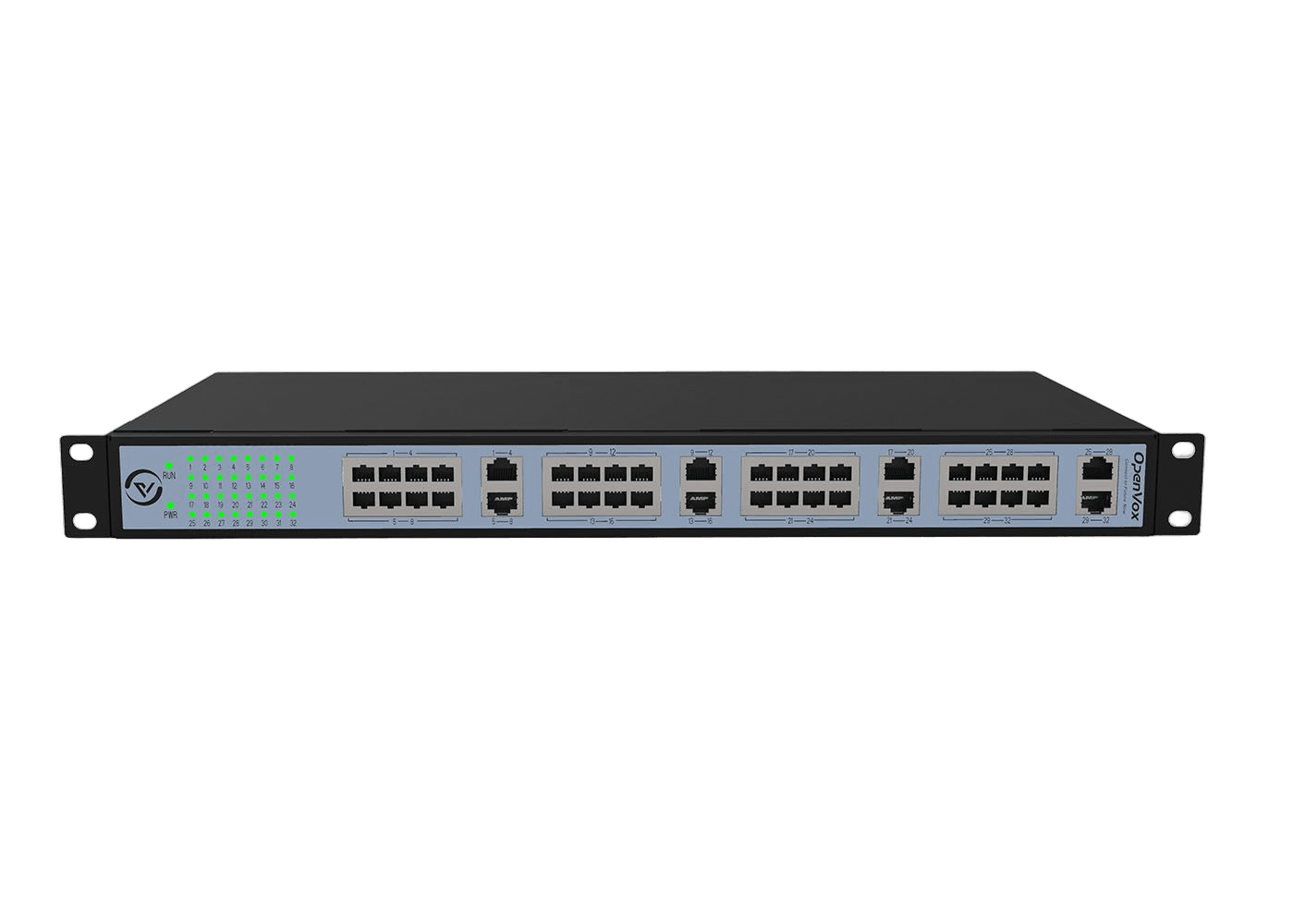
Connect supported SIP or analog endpoints to defined work areas.
Route approved paging or priority messages through the selected SIP paging environment.
Evaluate qualified wireless or secondary paths for priority voice traffic.
Connect office users, production areas, paging zones, and local trunks through a managed OpenVox calling platform while keeping each site's access requirements explicit.
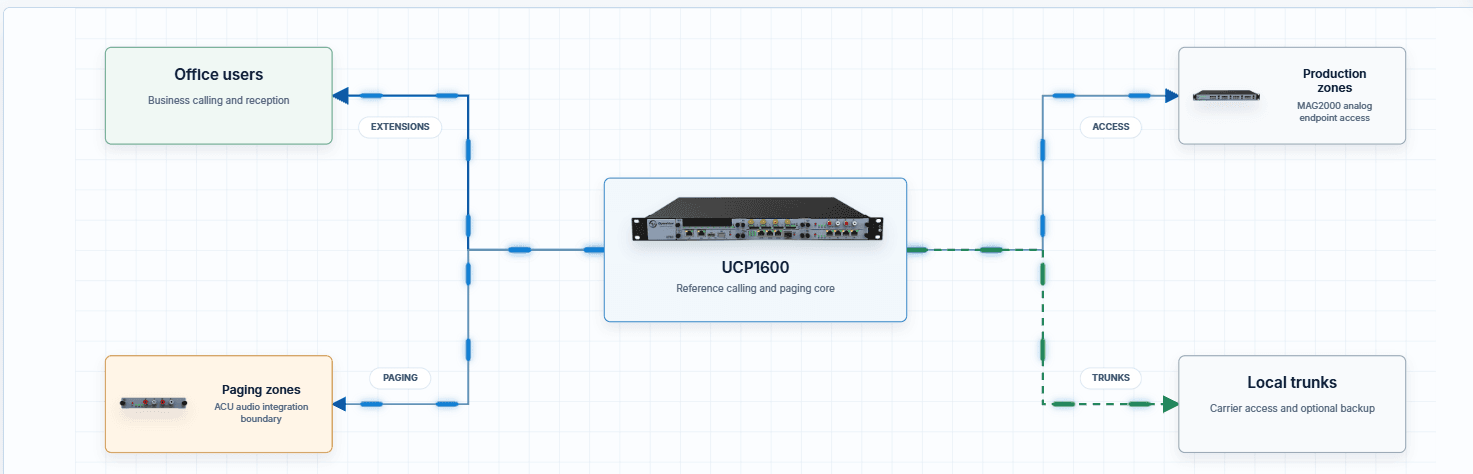
The project verifies who communicates, which endpoints are used, and how priority calls behave before equipment is selected.
List offices, production areas, service points, and paging zones.
Document internal, external, hotline, and announcement requirements.
Map UCP, SIP, analog, digital, and cellular roles.
Test endpoints, routing, paging coverage, and the selected failure behavior.
The final combination follows the number of zones, endpoint types, trunk services, and approved continuity scope for the site.
No claims are made regarding factory automation, physical security, monitoring, or industrial certification.
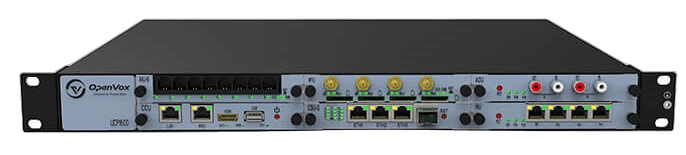
UCP documents transfer, forwarding, conferencing, number analysis, and permission control functions.
UCP documents paging broadcast, hotline, and emergency call functions.
UCP supports communication among documented analog, SIP, and software endpoints.
Selected UCP models and cellular gateways can be evaluated for defined continuity roles.
Share the site zones, endpoint types, paging tasks, trunk services, call priorities, and continuity expectations. OpenVox can help define the required communication roles.
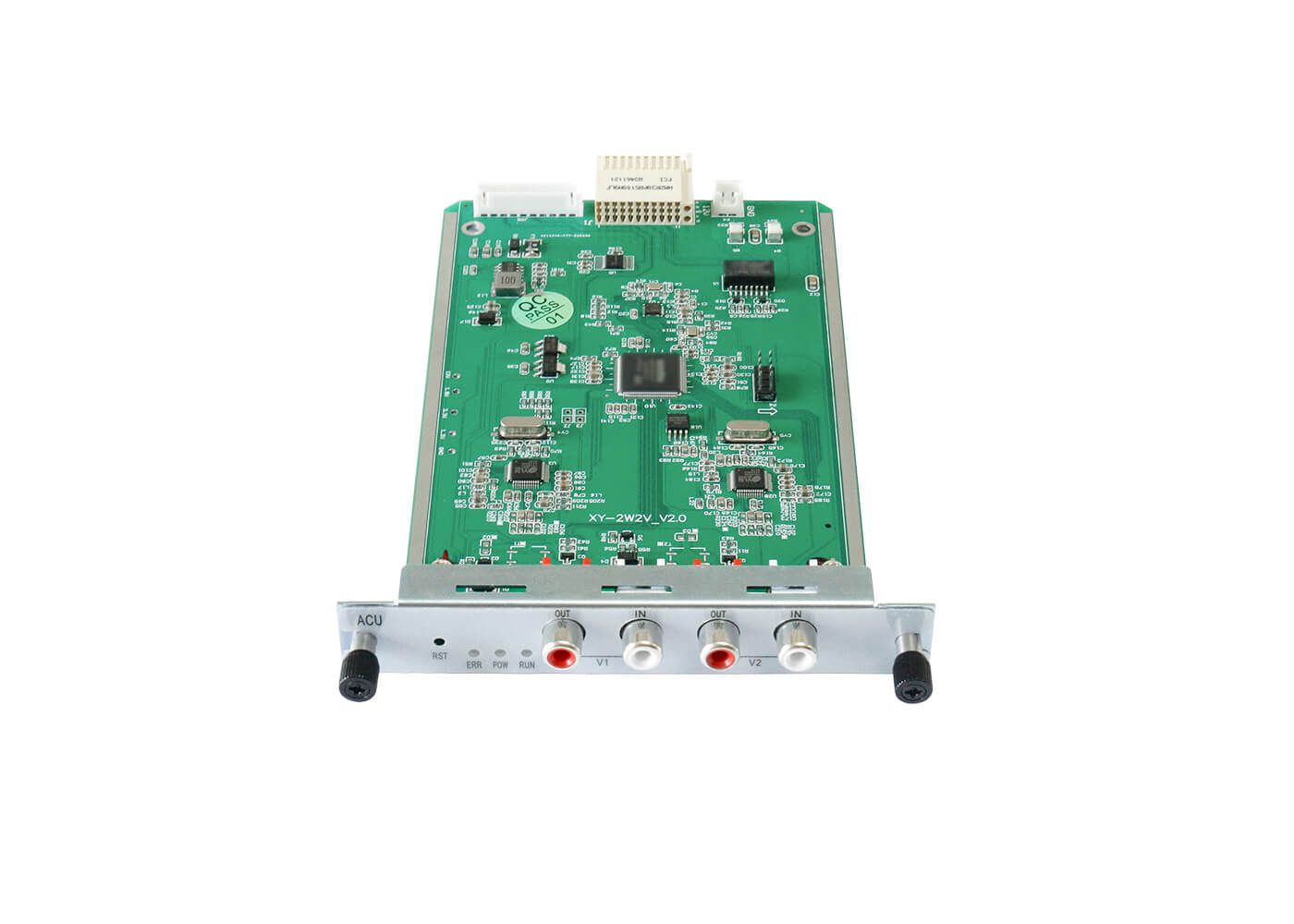
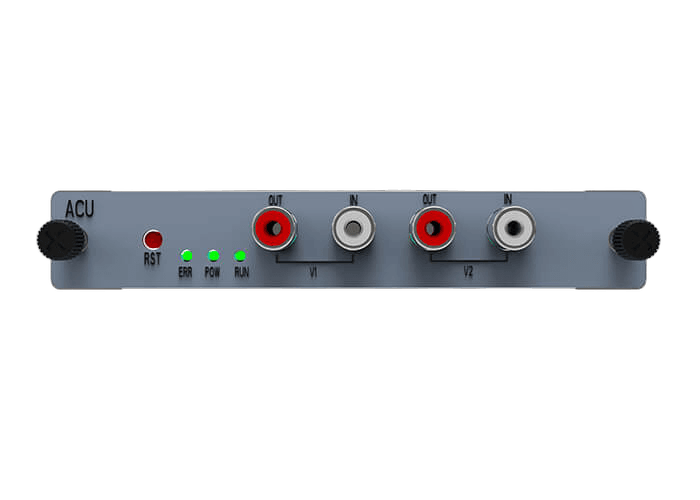
Audio interface cards available for UCP1600/2120/4131 series chassis; the ACU module provides 2 pairs of audio ports.
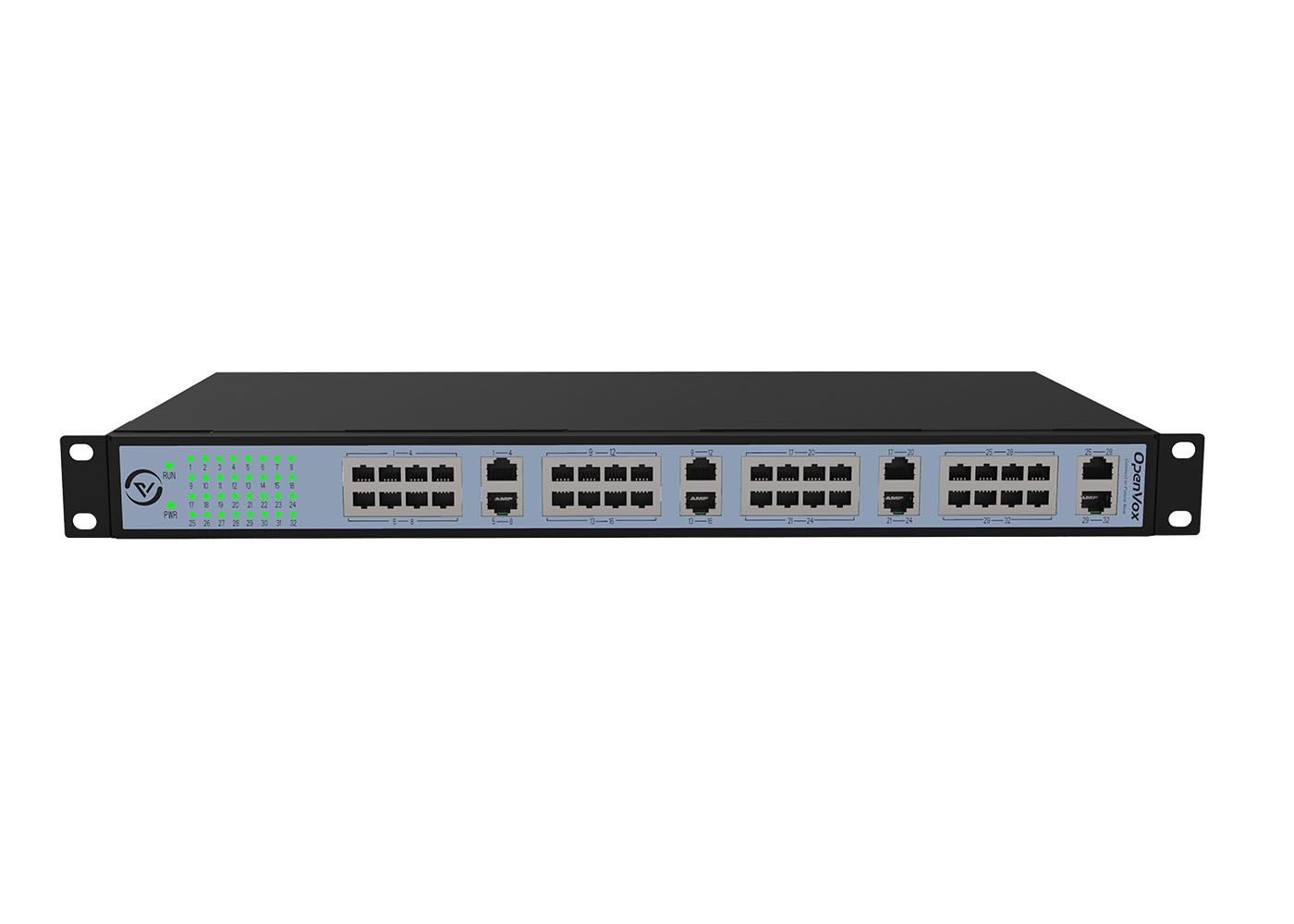
Supports 16/24/32 FXO/FXS combination ports; 4 Gigabit Ethernet ports; Uses standard SIP protocol;
Describe your requirements. Our team can help you select and plan your OpenVox solution.